









article
Requirements Management in Industrial Infrastructure Projects
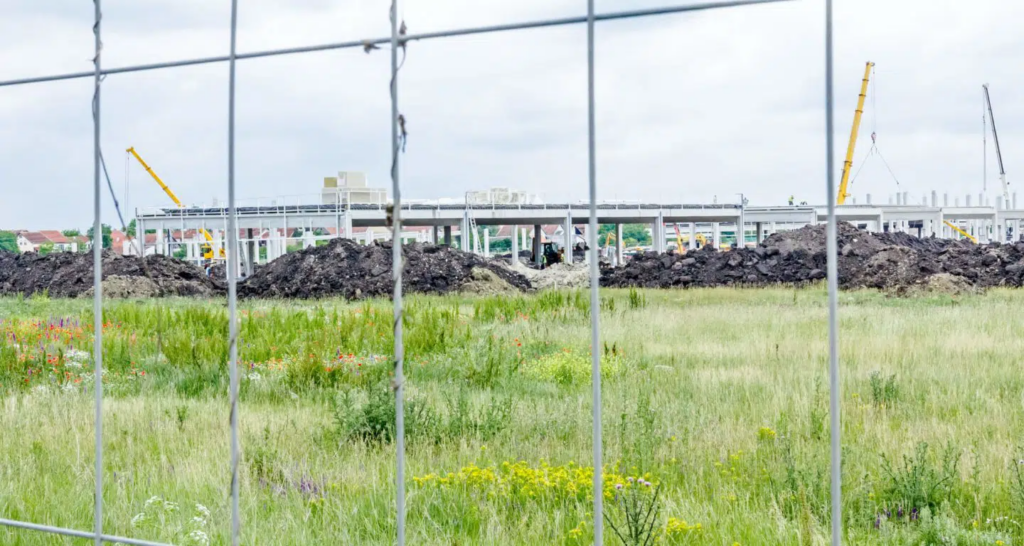
With project durations spanning several years, dependencies that extend throughout an entire company, and investments running into the millions, industrial infrastructure projects pose a particular challenge for all parties involved. A prime example of this is Tesla’s planned Gigafactory in Berlin-Brandenburg. To ensure that the planned facility delivers maximum value to the client, it is essential to establish comprehensive and consistent requirements management right from the start.
In addition to requirements such as land area, facility capacity, output, and performance, strategic requirements also play an important role in requirements management. To fully understand these needs, it is of the utmost importance to involve all stakeholders within the company.
Interdisciplinary Project Work
Those who define requirements for the future infrastructure may come from various departments. Examples include development, production, sales, and corporate development. In the example of the Tesla Gigafactory mentioned above, the production department is certainly the primary focus. It is essential to work with the relevant stakeholders to identify the technical requirements for the new infrastructure asset, validate their plausibility, and document them accordingly in a requirements set. Technical expertise that enables a thorough evaluation and validation of these requirements is of great importance for the role of requirements management. The requirements specification must be structured appropriately for each project phase and serves as the foundation for all parties involved in the project.
This means that the information and requirements provided must correspond, in terms of scope and level of detail, to the information needs of the respective planning phase. A set of requirements that is too extensive can lead to additional work for those responsible for planning in the form of filtering activities, due to the large amount of information that is not (yet) needed. Conversely, if sufficiently detailed information is not available at a certain point in time, this carries a significant risk of subsequent changes. Both cases can result in corresponding additional costs during the planning process.
Consideration of Strategic Requirements
Strategic requirements must be given equal importance to technical requirements, which significantly shape the infrastructure asset’s form and performance metrics. They reflect a company’s long-term goals and are intended to ensure the company’s sustained success. Since these goals are set by a company’s senior management, it is particularly important to take all relevant stakeholders into account and to develop a vision that is accepted and supported by all parties involved. To achieve this, it is often necessary to present and obtain approval for the relevant decisions and objectives within the company’s decision-making circles or committees. The expertise required for the preparation and execution of this process is a key prerequisite for the requirements management team.
Given that infrastructure projects sometimes have very long timelines, it cannot be ruled out that the company may go through a financially challenging phase during that time. In such times, it is important to review and evaluate all of a company’s expenses and activities in terms of their necessity. To ensure that this is done comprehensively, objectively, and—above all—in relation to the originally set goals, a comprehensive and transparent set of requirements is essential. This makes it possible to understand the background and context of decisions made to date.
Conclusion
A set of requirements that takes the above-mentioned aspects into account is of enormous importance in infrastructure projects and supports an efficient and smooth construction process. To develop such a set of requirements, it is important to establish a requirements management system tailored to the target vision right from the start of the project. This system allows not only technical but also strategic requirements to be fully captured, validated, and organized in a manner appropriate to both the project phase and the intended audience (“from the executive board to the foreman”). In addition to experience in requirements management and technical expertise regarding the infrastructure project’s scope, relevant experience in project management is also of great importance for those involved.
If you have any questions about requirements management for infrastructure projects or would like to discuss this topic, please feel free to contact us.