








Industry & Mechanical Engineering | Innovation
Radical Process Innovation at CCL
An international specialist in tube packaging transported empty tubes across Europe every day to its customers’ filling sites. Together with CCL, the BOLD KBC Center for Innovation launched a disruptive innovation process based on the scientifically grounded “The BOLD Way” method. The goal was to radically rethink centralized tube manufacturing, rather than merely optimizing existing processes incrementally.
Process Innovation by the Numbers
The Customer
Process Innovation for CCL
CCL is an internationally active specialist in tube packaging. The company is part of a global packaging group and supplies filling facilities in several European countries with various tube formats and designs for the cosmetics and consumer goods industries.
For capacity reasons, CCL produced the tubes centrally at a few locations and then transported them empty to the respective customer sites, where they were filled. This transport of “empty tubes” resulted in high logistics costs and tied up valuable resources. Rising logistics costs were increasingly undermining the company’s competitiveness. At the same time, pressure was mounting to reduce transportation distances and emissions along the supply chain.
The Project
Process Innovation in Tube Manufacturing Using the BOLD Way Method
Applying the principle of subtraction, the BOLD KBC Center for Innovation scrutinized every single step in the tube manufacturing process: Which components and steps were actually necessary, and which could be eliminated entirely?
In facilitated workshops with the relevant departments, the team broke down the entire production and logistics chain into its individual steps. It then evaluated each process step to determine whether it created concrete added value for the customer.
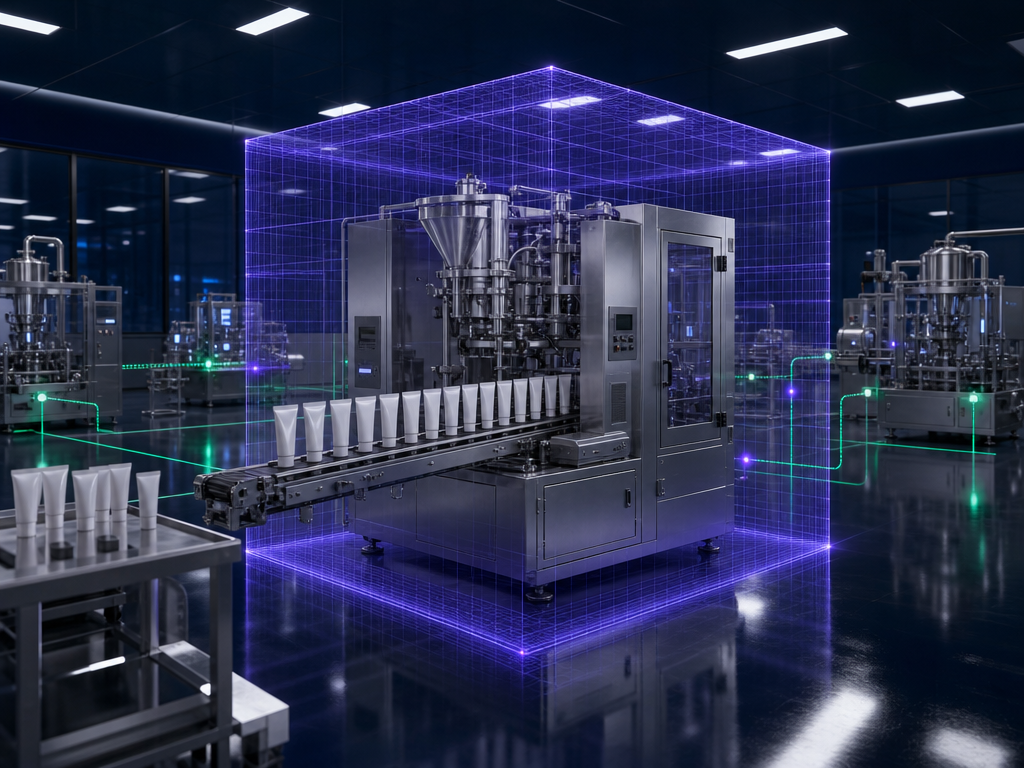
The analysis revealed a key inefficiency: the transport of empty tubes to the filling locations. Applying the complementary principle of fusion, the team developed a new production approach. The tube-forming step, which had previously been separate, was to be directly integrated with the filling process at the customer’s site.
To this end, the customer, in collaboration with the BOLD KBC Center for Innovation, designed a system using smaller, decentralized tube-forming machines. These enable on-site production based on demand, rather than manufacturing tubes centrally for stock and transporting them over long distances.


The result
70% reduction in logistics costs through decentralized tube manufacturing
By eliminating the transport of empty tubes, CCL reduced its logistics costs by 70%. At the same time, the company’s environmental footprint improved, as the reduced transport volume lowered emissions along the supply chain.
Decentralized manufacturing also enabled just-in-time production directly at the point of need. This allowed CCL to reduce its warehousing requirements at customer sites and respond more quickly to fluctuations in demand.
The new production model lays the foundation for flexible, locally based production that is consistently aligned with customers’ actual needs. It can also be scaled to additional locations, thereby providing a blueprint for future process innovations across the entire production process.
The project demonstrates the potential that consistent process innovation can unlock for cost savings and sustainability when traditional assumptions are fundamentally questioned.