



Press Release
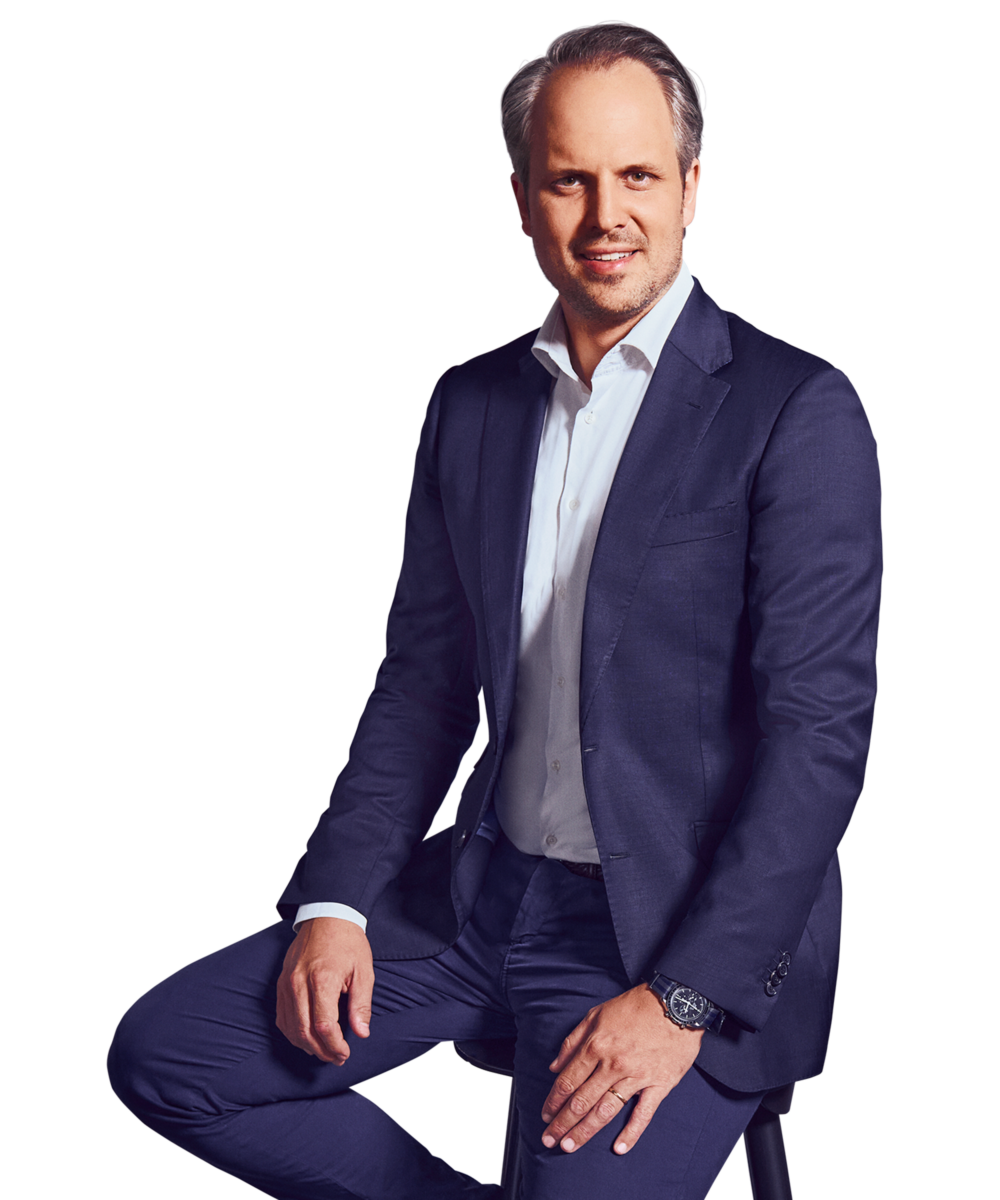
Interview with Jonathan Isele
Q: Jonathan, you’re a manager at KBC and have worked on many different projects throughout your career. What keeps the work of a consultant exciting for you?
A: Essentially, the fact that, as a consultant, I’m constantly faced with new situations and exciting challenges. These can range from various issues that arise during project work to specific requirements that our clients place on us as consultants.
Last year, for example, I conducted a feasibility study for setting up an assembly line in Europe, including a benchmarking analysis of potential locations. Our client—a manufacturer of innovative lighting systems in the luxury segment—wanted a fact-based and reliable foundation for its strategic decision.
Shortly thereafter, I worked with one of our senior partners to develop a restructuring plan for the manufacturing division of a well-known automotive supplier. The company had filed for bankruptcy, partly as a result of the COVID-19 pandemic.
The variety that comes from working on different projects and with clients across various roles and industries requires a high degree of flexibility and a willingness to adapt quickly to individual (and sometimes volatile) requirements. While this can be challenging in day-to-day work, for me it is what makes the consulting profession so appealing.
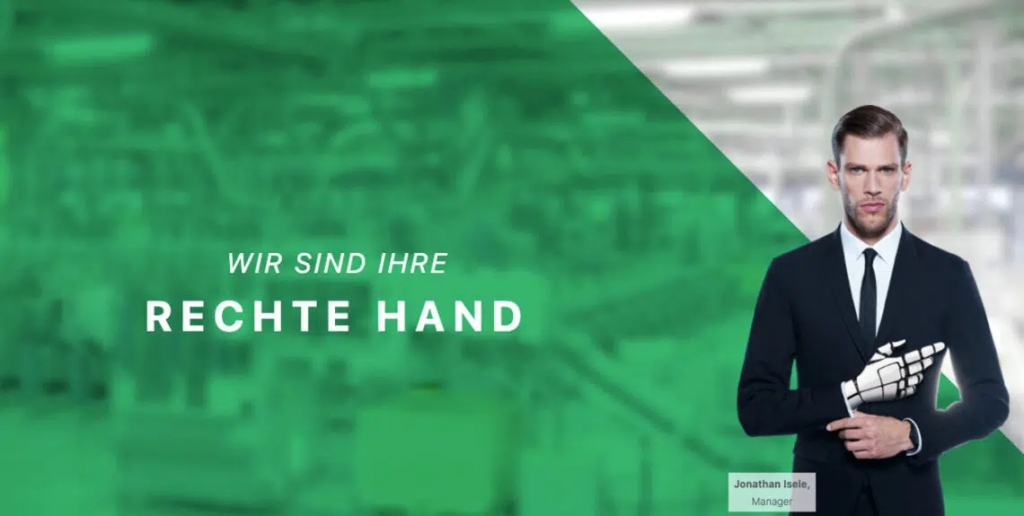
Q: On the KBC website, under “Case Studies,” a picture of you with a robotic hand immediately catches the eye, alongside the slogan “We are your right hand.” How exactly should this message be interpreted?
A: In our consulting projects, we develop customized solutions that create lasting value for our clients. A data-driven, unbiased analysis and a certain degree of freedom and creativity in finding solutions are essential to this. At the same time, our solutions only realize their full potential when they are supported by our clients and consistently implemented. To ensure this, we maintain collaborative relationships with our clients “on an equal footing.” In this role, we are happy to roll up our sleeves and get to work pragmatically wherever it is needed—serving as our clients’ “right-hand man.”
Q: On the topic of the “right hand”: there are now prosthetics that can be controlled via neural signals, thereby replicating natural movements. When you think of innovations or innovative concepts, which development excites you the most right now?
A: I would say the developments in the field of (individual) mobility as a whole. As a consulting firm with many years of experience in the automotive sector, we focus in particular on the rapidly growing demand for electric vehicles in all their forms, as well as the corresponding implications for OEMs and their suppliers.
However, the search for new, personalized, and sustainable forms of transportation has also given rise in recent years to approaches that go far beyond the use of new propulsion technologies. These range from the now-established business models of the sharing economy (e.g., the ubiquitous e-scooter sharing services) to innovative drones as potential modes of transportation. A wide variety of concepts are currently being developed worldwide in this field. In addition to specialized companies and startups, established automakers and mobility providers are also showing increasing interest in the topic. For example, Hyundai has been working in partnership with Uber for some time on the air taxi network of the future, and General Motors recently unveiled its vision for an autonomous drone. According to recent media reports, the Volkswagen Group is also examining the potential of such concepts and possible partnerships as part of a feasibility study.
It will be interesting to see how we get around in the future, what technologies will be used, and which solutions will prevail across the wide range of mobility applications.
Q: With last year’s merger with Bold, KBC now has a strong partner at its side when it comes to innovation. You are a member of a working group focused on this topic. In your opinion, what are the basic requirements that companies must meet in order to be—or remain—innovative?
A: Companies often face a trade-off. On the one hand, they must ensure that their services are delivered as efficiently as possible in order to remain competitive. On the other hand, few companies can afford to focus solely on existing products. Instead, they must identify innovative ideas and turn them into profitable products, services, and business models. This often conflicts with the incremental optimizations that are necessary for economic reasons. For example, a new innovative product in a company’s portfolio can lead to a decline in sales of its previous “high-runners.” In our experience, companies that remain sustainably innovative despite this challenge have three things in common:
- They are open to innovation.
- They systematically develop new ideas and actively drive them forward.
- They monetize innovations in the form of marketable products, efficient processes, or new business models.
All of this requires structures and methods that differ from standard management tools. Our partnership with Bold addresses precisely this need. Bold’s portfolio ranges from establishing a systematic innovation management framework to developing concrete and actionable innovations.
Our clients and partners benefit from KBC’s professional expertise and strong execution capabilities, combined with Bold’s innovative strength and methodological expertise—from concept to implementation, we are your trusted partner.