









Technical article
The Green Disruption: Sustainability
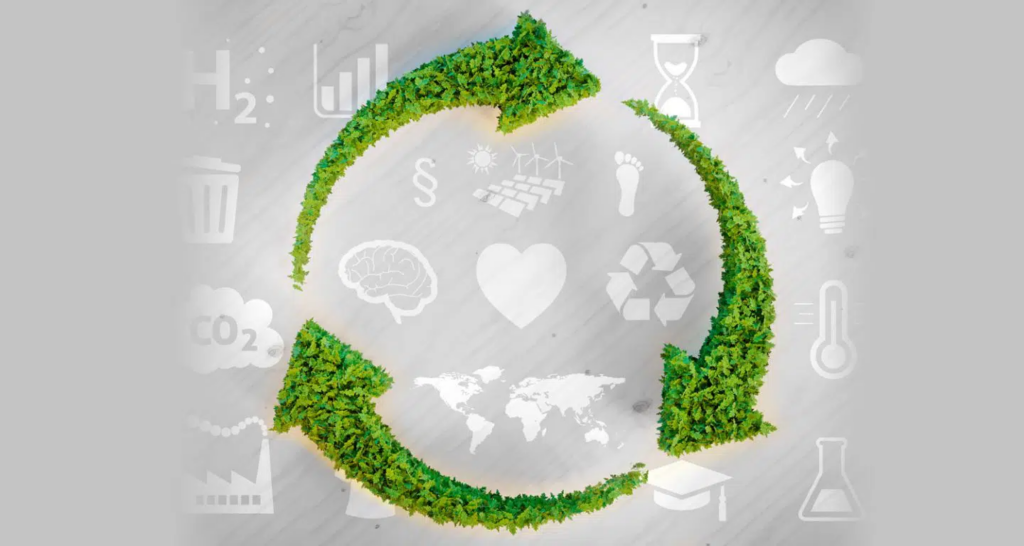
Climate change—particularly risingCO2 emissions, increasing resource consumption, global population growth, and, not least, the current global COVID-19 pandemic—will give the issueof sustainabilitya tremendous boost. Companies should rise to this challenge and make sustainability a central focus of their strategy in order to gain a competitive advantage.
CLIMATE CHANGE
Hypothesis
In the future, companies will be required—to a much greater extent than before—to report on the greenhouse gas emissions generated by their production processes, their supply chains, and the use of the goods they manufacture.
Perception
The UN climate agreements of recent years, national climate legislation, and, not least, the “Fridays for Future” youth movement are compelling more and more companies to make their sustainability strategies transparent and to demonstrate their contribution to climate protection goals. In addition to the sustainability of their own production, the focus of the question “How sustainable is this?” will in the future also be on the sustainability of their global supply chains and the entire life cycle of the manufactured products, including recycling.
AIR POLLUTION
Hypothesis
Thanks to the global economic shutdown, the world is experiencing for the first time, collectively and firsthand, what happens to our environment when we produce fewer pollutants.
Perception
Environmental satellites operated by NASA and the ESA have detected a significant decline in air pollutants over China caused by emissions from traffic, power plants, and factories. Rough estimates suggest a reduction of more than 40%.
The BBC reports that carbon monoxide levels in New York are currently 50% lower than usual. Data from the Sentinel-5P satellite show a sharp decline in nitrogen dioxide concentrations over major cities across Europe—particularly in Milan, Paris, and Madrid.
The water in Venice is crystal clear, dolphins are returning to Italy’s harbors, and, according to estimates by the Berlin-based think tank Agora, Germany will—contrary to all expectations—very likely be able to exceed its own 2020 climate protection targets.
The positive impact of the global lockdown on the climate is clear and immediately apparent.
GLOBALIZATION
Hypothesis
Once the COVID-19 pandemic has been overcome, demand for sustainable, locally produced products will be much higher, as the effects of globalization, highly interconnected supply chains, and the associated risks are raising market awareness.
Perception
The procurement strategies of many companies and organizations—which involve purchasing products from low-cost countries (LCCs) or best-cost countries (BCCs)—are leading to severe supply problems in some cases under the current circumstances. Respiratory masks or protective clothing, which were sourced in Asia due to the price advantage, are becoming scarce due to their sudden “systemic importance” and are subject to a global price war. Certainly, declining demand from end customers, but also the vulnerabilities of automotive supply chains within a global network, reveal the weaknesses of globalization. Once the crisis is over and everything ramps up again, another effect of interconnected supply chains will become apparent—their inertia.
Our Perspective
We believe that “sustainability” will be THE next major disruption following digitalization. Companies will lose their competitive edge if they cannot credibly demonstrate their contribution to addressing climate change. Market demand will become far more sustainable, and companies and organizations will once again pay closer attention to their own risk management when it comes to strategic and sustainable sourcing. “Sustainability” will drive companies and their products out of the market if they fail to meet this challenge.