








Technical article
The PHEV Paradox
Munich – Plug-in hybrids, which combine two powertrain systems in a single vehicle, are enjoying growing popularity both in terms of demand—with the annual growth rate of new registrations doubling, even in Germany—and in terms of manufacturers’ offerings. Our forecast is that there will be a significant absolute increase in PHEV vehicles over the next few years. In this article, we discuss why this is the case and whether this development is environmentally sustainable, as is currently demanded by the public and the media.
The demand side:
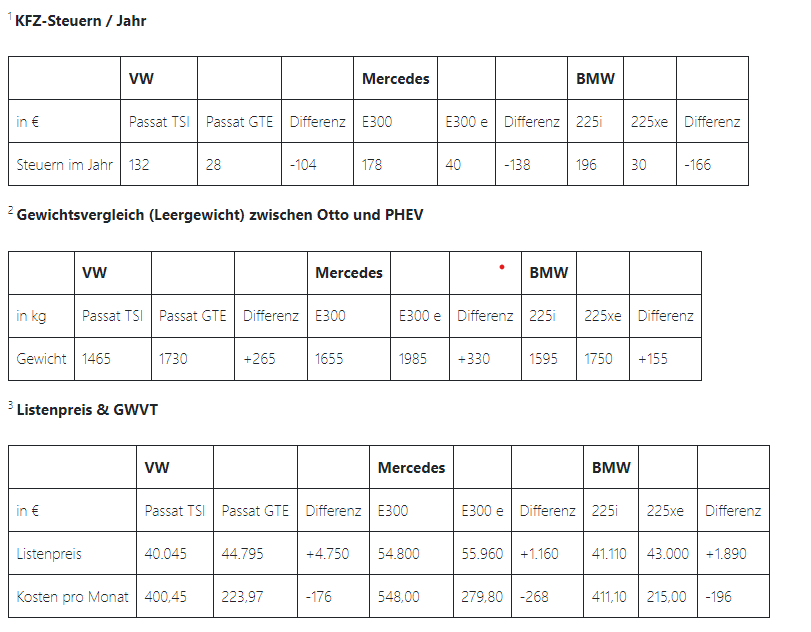
The government offers tax incentives for electric vehicles (halving the monetary benefit). In addition, there is a significantly lower vehicle tax (approx.51 times lower) due to the vehicle’s lowerCO2emissions and reduced fuel consumption during the test cycle. These are the obvious advantages of plug-in hybrids. At the same time, customers can drive with zero local emissions, which is also a selling point for many. These advantages are offset by higher purchase or leasing costs (up to10%3) and no real variable cost advantage (comparison of kWh and fuel costs) compared to diesel or gasoline vehicles—good reasons to opt against a plug-in hybrid.
In addition, there are only about 20,000 public and semi-public charging stations across Germany operated by energy companies, parking garage and lot operators, supermarkets, and hotels. The German government’s target of one million electric cars by 2020 would require up to 70,000 public charging stations. As things stand today, this is completely unrealistic—if the target is not met, a clear trend toward PHEVs is expected over the next few years, as this is the only way to reduce dependence on charging stations while simultaneously pursuing the desired goal.
The provider's side:
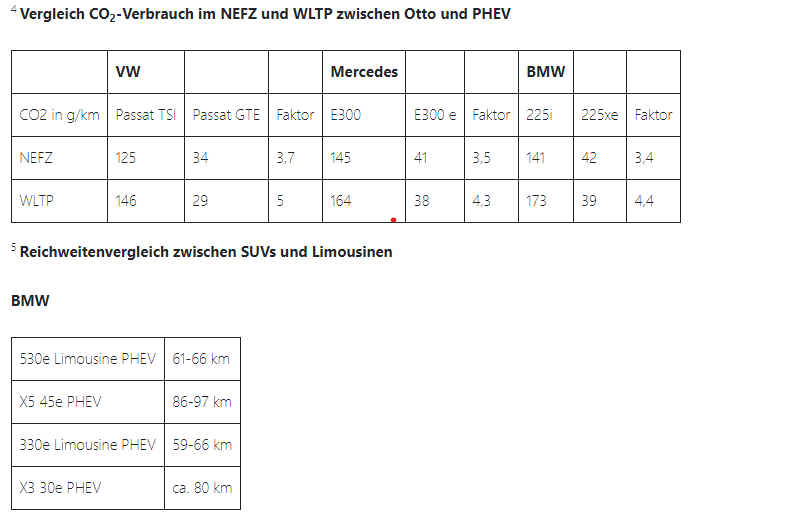
Das reduzierte Angebot seitens der Hersteller an Plug-in-Hybriden war in der Vergangenheit der Ausdruck der beschriebenen Diskrepanz der Vor- und Nachteilen der Alternative zu Benzin und Diesel-Fahrzeugen. Dies wird sich in Zukunft massiv ändern – die CO2 Flottengrenzwerte machen es möglich. Die PHEVs sind der entscheidende und gleichzeitig einzige Hebel für die deutschen OEMs ihren Flottendurchschnitt entscheidend zu senken. Zusätzlich zum ohnehin geringeren CO2 Verbrauch im Testzyklus4 werden alle in 2020 zugelassenen Fahrzeuge mit einem CO2-Wert von < 50 g/kmin der Durchschnittsberechnung doppelt gewertet (1,66 in 2021 und 1,33 in 2022). Nach der Einführung des WLTPs gilt für PHEVs außerdem ein „Utility factor“, dieser Faktor repräsentiert den Anteil der Fahrten, die elektrisch zurückgelegt werden und hat Einfluss auf den Durchschnittswert des PHEV, welcher sich dadurch vorteilhafter gegenüber dem Verbrennungsmotor entwickelt. Der für jeden OEM individuell vorgegebene CO2-Flottendurchschnitt basiert auf dem Gewichtsdurchschnitt der gesamten Fahrzeugflotte. Entsprechend kann sich der OEM bei einem höheren Durchschnittsgewicht auf einen höheren erlaubten CO2-Flottendurchschnitt einstellen (Gewichtsmehrung von mind. 10%2). Dieser Vorteil von PHEV-Neuzulassungen zahlt sich jedoch erst ab dem jeweiligen Folgejahr aus, da der Gewichtsdurchschnitt auf der Basis des Durchschnitts der letzten 3 Jahre berechnet wird.
Another advantage for manufacturers is that, unlike fully electric vehicles, PHEVs keep manufacturers’ engine plants running at full capacity. The investments made and production resources can continue to be utilized.
Furthermore, hybrid powertrain technology is a key factor in enabling the mass production of SUV models. SUVs have the advantage of offering more space for battery cells, which in turn allows for a longer range (approx.30%5). As a result, SUVs will remain attractive to both buyers and manufacturers, and there is no need to adjust the product portfolio.
Conclusion:
The shift of the automotive market toward PHEVs is currently being directly or indirectly subsidized or promoted by the government in many ways. However, from a sustainability perspective, the PHEV is a suboptimal solution: Thecarbon footprint of electrified powertrain technology is significantly worse along the supply chain than that of internal combustion engines, and the PHEV not only combines two propulsion systems, but also combines theircarbon footprints—the poor one of the gasoline engine over the vehicle’s operational lifespan with the poor one of the electrified powertrain in the supply chain—which we call the PHEV paradox.