







Product Development | Automotive
Requirements Management in a Major Project: Implementation of a State-of-the-Art Test Facility
A leading international premium automaker needed its own state-of-the-art test facility to evaluate future vehicles and highly automated driver-assistance systems—but lacked the specific expertise, structured requirements management, and sufficient internal capacity for an infrastructure project of this complexity. KBC advised the company on the project’s implementation for more than 10 years: from the initial strategy and site selection, through the collection and consolidation of requirements from over 1,000 users, to the successful commissioning of the group’s largest test facility worldwide.
Requirements Management by the Numbers
The Customer
International automotive group and leader in innovation
The customer is one of the world’s leading premium manufacturers of automobiles and mobility services. As a technology leader, the company continuously invests in the development of highly automated driving and parking systems. To validate safety-critical functions—particularly driver assistance systems (DAS) up to Level 4—innovative test infrastructures are essential, which cannot be replicated on conventional, existing test tracks.
In the past, insufficient in-house testing capabilities led to quality risks due to time pressure, increased travel and logistics costs, and a heavy reliance on external test sites. The strategic goal was therefore clearly defined: a globally unique, future-proof test site—designed exclusively for the most demanding testing of next-generation automated driving and parking.
The Project
Requirements Management as a Core Service in Technology Infrastructure Implementation
KBC took on the central role in the project and ensured consistency in the vision, strategy, and requirements implementation across all project phases. This project is regarded in the industry as a prime example of scaled, cross-functional requirements management.
The scope of the consulting engagement covered six core areas:
- Stakeholder Management:Ensuring the appropriate involvement of all stakeholders, from top management and the full executive board down to operational site users.
- Testing Requirements:Structured collection, evaluation, and validation of the requirements of over 1,000 internal users regarding future route layouts, building infrastructure, and workshop equipment.
- Test Processes:Process Design for Efficient Testing in Live Operations and Seamless Integration into Related Digital Development Processes
- Quality Management:Cross-project QM to ensure consistent, auditable quality standards.
- Operating Model:Co-development of the future operational model, including the evaluation of potential operator scenarios.
- Strategy & Business Case:Development of a long-term test site strategy, including ongoing financial analysis and business plan validation.
In addition, KBC supported the international property selection process, the benchmarking of alternative solutions, and the integration of the developers responsible for delivery. Over the course of more than 10 years, the project had to overcome significant internal and external hurdles—including global pandemic phases with strict travel restrictions, rising construction material costs, highly volatile product requirements for the series, public opposition to land development, and extremely high cost pressures.

The result
Consistent requirements management saves the customer more than €100 million in investment costs
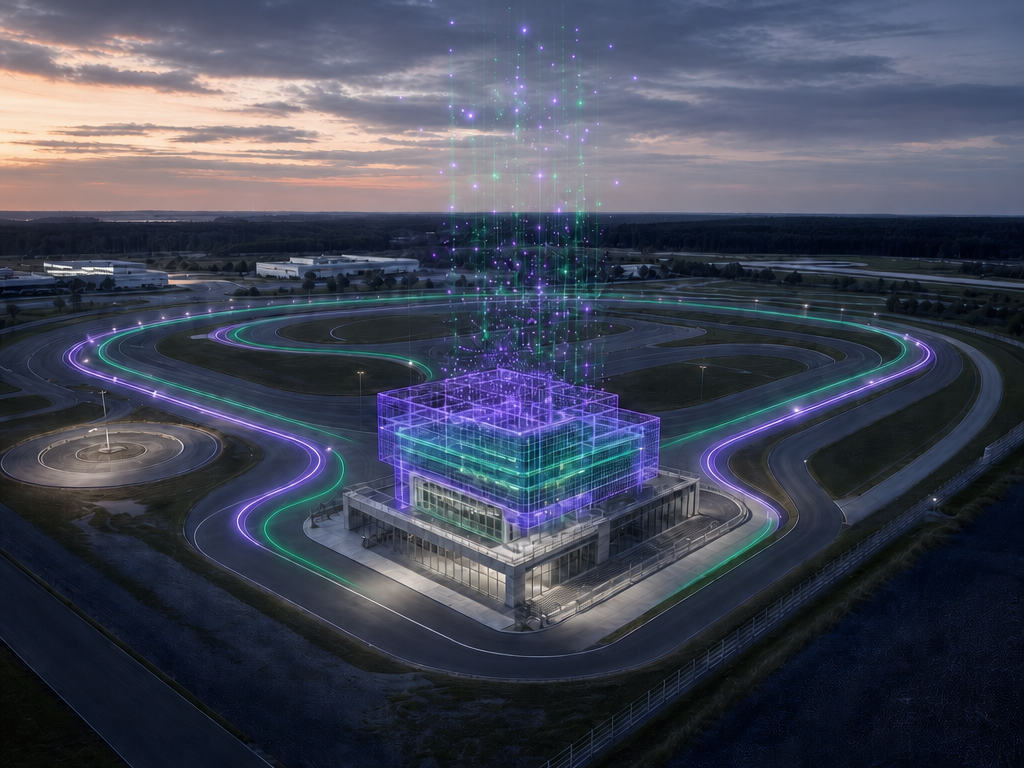
With the opening of its new state-of-the-art testing facility, the automotive group has successfully launched a 600-hectare site that is unique worldwide—featuring a total investment of over 300 million euros, new highly skilled jobs, 100% green electricity, and the highest sustainability standards on site.
Thanks to the rigorous requirements management implemented by KBC, investment costs were reduced by more than €100 million compared to the initial maximum budget, without having to compromise on the functionality of the test tracks. During ongoing operations, travel and logistics costs to external test sites worldwide are significantly reduced. The new physical and digital infrastructure ensures the Group’s capacity for innovation in future production vehicles—among other achievements, major innovation awards for new Level 3 highway pilot systems were secured shortly after the facility went into operation. The site now serves as a permanent, future-proof foundation for testing the Group’s future vehicles and autonomous product innovations.